The Cat and the Squirrel

…an unusual love story.  

Referencing animals in the title sets an expectation I’ll be telling you a fable, and I suppose that’s a fair description. After all, this story possesses both a lesson – actually, three of them – and the requisite animals, albeit two plaster animals.

My grandparents had an unusual love story. (Isn’t that true of all grandparents?) I knew they met – and fell in love – because of their shared passion for ballroom dancing.

But, boy, oh, boy, were they ever the couple most likely to never get – or stay – together just by virtue of the “lacking things in common” department. Though they were evenly matched looks-wise – he with his dashing hat, manner, and astonishingly clear blue eyes – she with her fashionably flowing dresses, ready smile, and big brown, laughing eyes, they were not so much a “swipe right on Tinder” kind of couple.

In fact, I’m convinced the guy who conducted the 1950’s study on mate selection came up with “opposites attract” after meeting my grandparents. Here’s the short list of their non-overlap on the ‘ole Venn diagram:

  1. He was a man of 10 words or less, while she was a woman who delighted in upbeat, back and forth conversations of 10 minutes or more.
  2. He didn’t care for yards, yardwork, or words that had “yard” in them, although he would sit in the yard listening to a ballgame. My Grammie was all about the yard, rendering that exquisite tiny plot of land gorgeous with flowers, a koi pond, and well-placed vintage lawn furniture that wasn’t vintage at the time.
  3. He enjoyed a brisk business-like game of Blackjack, while she was devoted to her bridge clubs, enjoying all the social niceties they provided.
  4. When he got mad he was a communications camel who could go for weeks without uttering a single word, fully committing to his “strong silent type” persona. She was gregarious, easy-going, and never met a positive word that shouldn’t be uttered. When she got mad she would just sputter out, “Oh, wouldn’t that just frost you?” and go her truly merry way.

The funny thing is you meet your grandparents – if you’re lucky to meet them at all – in the twilight years of their life together. That means the lens through which we view their relationship may seem clear at the time, but it’s not 20/20. That was certainly the case with my own Grammie and Daddy.

Their journey as a couple unfolded, not in real time, but along the timeline that was my own emotional development, providing me with the ability to appreciate what it means to be in a long-term loving relationship. Granted, it can feel heavy on the “long-term,” and not so much on the “loving” at times. 

There were rough patches. Plenty. The grandparents I met later in life had survived wars, a head-on car crash when neither was expected to live, and the tough road a marriage travels when alcoholism is one of the not-so-restful-stops.

I didn’t see much in the way of romance, except for one thing they did, but it spoke volumes. Their adorable and quirky expression of love that was re-ordering the cat and squirrel “live action” statues on their backyard pole.

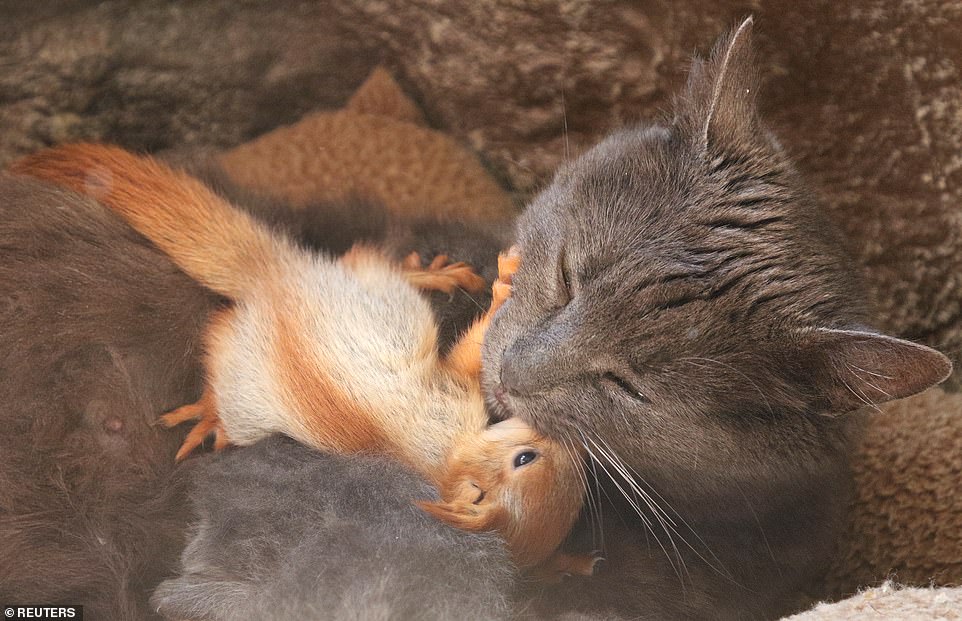
The cat and the squirrel were two plaster figurines my grandmother artfully arranged on the post behind their modest house. She would position these unlikely-to-be-paired-up critters, so the cat was chasing the squirrel.

For years, every so often – she never knew exactly when he would do it – my grandfather would switch the order. Sometimes he was near her when she discovered his antics, and I would hear her say, “Ohhhhh, you!” as she turned toward him. The scene went into slow-mo. There wasn’t any physical display, but what a moment. Precious. Authentic. Powerful.

The meaningful look they exchanged was so intensely personal, I remember feeling happy, but almost embarrassed. I felt as though I’d photo bombed an intimate picture of their relationship.

These unforgettable interludes have stuck with me, becoming part of our family’s lexicon. In fact, my husband and I will often say, “Well, it’s like the cat and the squirrel,” as though it’s some sort of parable that everyone knows. We know.  

As it turns out my groom and I have several of our own cat-squirrel activities. One of these is when I carefully arrange dishes separately in the sink, lovingly squirting in the exact right amount of soap for a proper soaking, and he arrives a nanosecond later, dumping out the soapy water, and stacking the dishes all in one dry, towering pile.

I put down throw rugs, he picks them up. He pours cereal into a bowl, and I abscond with it, cackling as I hear him shuffling around, wondering where the flock he left it. 

We’ve acted out these silly scenarios – plus several more – over the course of our triple+ decades together. It’s these goofy moments when we’re alone that we’re exactly the same people together as we were the day we met back in 1980-something. And here’s where those lessons I mentioned at the top of the article come in for a photo finish as to which of them represents the most important one.  

Lesson One. It doesn’t matter what a marriage or relationship looks like to those on the outside, or how others might apply their personal Litmus test assessing its success. The two people in it, define it.

Lesson Two. One of the most beautiful outcomes of a long-term relationship is you notice things, ensuring your significant someone knows they’re seen, if not heard. (Kind of like what our parents told us when we were knee-high to a grasshopper.)

Lesson Three. Sharing emotional and physical space with someone to whom you’ve plighted your troth means you share a non-verbal language that’s often not spoken by anyone else.

For me, the strongest message of love is a non-verbal one, but I do need that cat-squirrel action to really send the message home. Hey, has anyone seen that bowl of granola I just poured?

Going Home

Home 2Home. What an image that evokes. We often think of it as a physical structure; home ownership being an element of the American Dream to which many of us aspire.
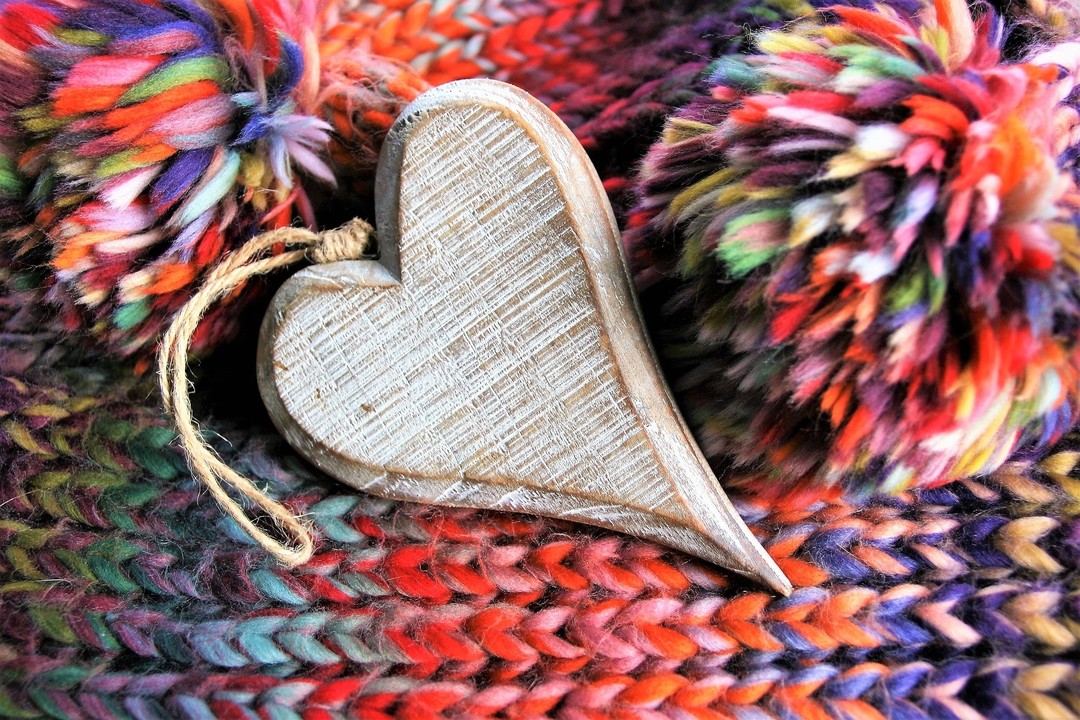
Home. It’s not just a word, but rather an entire frame of reference. An experience. An emotional concept. That’s why the homes we make embody not just physical comfort, but they represent peaceful sanctuaries.

What happens when you don’t have a home? When it’s taken away from you? Even more painfully, what happens when it’s completely wiped off the face of the earth in mere minutes?

In the wake of the Camp Fire I’ve been thinking a lot about this concept of home.

For our family, the destruction of Paradise became more than just a news story when we received the first pictures and phone call from our daughter attending college in Chico. It was early in the morning when she saw the plume of smoke, texting me the image. The rest is a blur.

“The rest” included the horror of waiting for news as her boyfriend’s family valiantly escaped Paradise with their lives. It was her being evacuated as she described for me the indelible images that included watching the fire approach Chico, while she packed whatever she could, including her beloved cat, as she fled her apartment.

And about that boyfriend’s family. We haven’t met them face-to-face yet, but from the onset we’ve taken an emotional journey with Mama and her three kids as they drove through multiple fires, against some pretty stacked odds, to get to safety. It was her quick thinking – she was dropping off one child at school when she had a bad feeling – that made it possible for her to hurry back home to retrieve her other children.

It took her 10 hours, during which time she left a good-bye message for her husband, saying she was sorry. They all ended up safe, although they lost everything, including their beloved pets.

While it’s true, they’re luckier than many, having a place to live with the rest of her family in Chico, I’m amazed by their resilience. Every possession has been taken away, and yet Mama figured out how she could still give.

After the smoke had, quite literally, cleared this woman who lost her house, her job, her belongings, all in one day, cut her long, lustrous hair and donated it to “Locks for Love.” Are you crying yet? Okay, well try this one.

One of their cats survived. Tireless rescue workers just found him at the site of their burned out husk of a home, where he was trying to return after the fire. He is THE Christmas gift. This little kitty has singed whiskers, burned paws, and “I survived big trauma” written all over his cute little furry face. And the look written on those three kids’ faces? Sheer joy, love, and wonderment. That adorable kitty restored a smidgeon of normalcy to this family, which is Christmas gift number two.

We’re all connected. This is a reminder of not just how tenuous life is, and how much we can’t control, but how important it is to remember the connections.

We don’t need to take on all of the suffering in the country, adopt all of the children in the world, nor give away every dollar we earn. We just need to remember – and honor – the connections. What if every, single one of us offered our home just once to a critter, or a person in need? Wouldn’t that be the best home ever?

Biography. After a diverse and rewarding career in television broadcasting, Diane wended her way toward both a teaching credential, and a Master of Arts in English, earning several publishing credits in the process, including her master’s thesis highlighting the work of author, Langston Hughes entitled, Changing the Exchange. Diane lives and works in northern California, where she’s often found performing in both scheduled and unscheduled productions in front of mostly attentive audiences. Her “sit-down standup” style of writing is featured in JUST BECAUSE I’M NOT EFFIN’ FAMOUS, DOESN’T MEAN I’M NOT EFFIN’ FUNNY, which is Diane’s fifth published book. Her other books, in no particular order include: Maternal Meanderings (Humor), Last Call (Humorous Mystery), KILL-TV (Humorous Mystery). Other publishing credits also include numerous essays that have appeared in a variety of periodicals, including MORE magazine, NPR’s This I BelieveThe San Francisco ChronicleSacramento magazine, Bigger Law Firm magazine, and the Sacramento Business Journal.

Link to Union (Published 12/17/2018)

https://www.theunion.com/opinion/columns/diane-dean-epps-going-home/


Sunflower Daycare

They’re impressive standing there all high, mighty…and alive. Wait, what am I talking about? My crop of sunflowers, of course.

From a $3.99 packet of organic sunflower skyscraper seeds grew an ensemble of healthy, smiling sunflowers rambunctiously waving in the wind, defying all the gardening odds when I’m the gardener.

How could I have known the low bar I’d set for even one of these exquisite pieces of flora to survive would flourish into a bounty of 25?

Their heliotropic little faces tracked the sun and my movements every day as I skipped amongst them, dribbling water from my shabby chic watering can into each little pot.

They began to feel less like plants and more like children to me. Can you say, anthropomorphism? Yeah, me neither. That’s why I’m writing it down.

I felt as though I was running a low maintenance daycare, rather than gardening. (Snack time is so much easier when your charges are heavily into photosynthesizing.)

Then, things changed, or rather grew. That meant I had to implement what I call “growing rounds.”

What began as a general plan to cultivate one of my all-time favorite flowers because of the happiness quotient they provide turned into the proverbial labor of love. No, really. Lots and lots of labor.

I had lovingly placed a scientifically significant number of seeds into small growing containers and, lo and behold, they actually grew. That meant I had to concoct an “on the fly” second phase growing round, which found me transplanting 25 seedlings into pots large enough for them to thrive.

There was one problem. Okay, there were numerous problems, but here are the top three.

1.   I didn’t have any large pots. Not a one.

2.   When I went to purchase them they were expensive as all get-out, and the 25 I needed quickly catapulted me right on out of my budget.

3.   Even if I were to take out a small loan and purchase the pricey pots I couldn’t find 25 large enough for my soon-to-be-soaring sunflowers.

So, I got creative. I found cheap plastic vessels that found their way onto my husband’s massive daily honey do list under the heading of, “You’ll finally get some use out of that cordless, now priceless, battery-operated screwdriver when you drill holes in these.”

(This is why husbands of writers often ask rhetorically, “Is there any way you can write this down in 6 words or less?”)

He commenced to drilling, and I commenced to replanting. We had our work cut out for us, but we did it. There they were – 25 lithe plants of promise standing tall in their new plastic homes.

It didn’t take long before I was speed walking around the yard watering these stalks of sunshine and realized they had already grown several inches. Like overnight. That’s when it dawned on me how tall these potentially towering homages to nature might get, were they to live to full maturity. Against all odds, it looked like they just might. This meant there would need to be a third phase growing round with another repotting and more drilling of holes.

Off I went to score even bigger – if not better – containers that would herald the final growing phase because, quite frankly, I just couldn’t handle any more phases. I was already three phases over my personal best in keeping so many plants-sprung-from-seeds alive. No biggie. I knew the drill, and my husband had one.

Then the birds came. Who knew birds love eating sunflowers, sunflowers being a particular delicacy of finches? Well, color me educated now because I witnessed them tearing – tearing! – those precious teardrop-shaped leaves with their sharp beaks. I felt as though they were tearing at my own limbs, it was so painful.

Can you say, mirror-touch synesthesia? Yeah, me neither. That’s why I’m writing that one down too. Although it usually relates to people, not plants.

Now I needed to launch a sunflower decoration program in the form of tying shiny ribbon on all 25 sunflowers. I sallied forth, determined to protect my adolescent plants.

Imagine my delight when birds attempted to land and then reacted by flying away immediately as if to say, “Uh-oh. This may not be a scarecrow, but I’m still feeling the scare part. I’m out!”

Then graduation day arrived. My sunflower daycare seedlings were all grown up and lined up. I was fondly looking upon 25 gorgeous Jack and the Beanstalk-sized stems topped by bright yellow faces, grinning out at me. I got to have five joyous days before a new problem came up. They were coming down. 

One by one they all began dipping their heads in what I at first mistakenly thought was a reverent bow to my mad growing chops. In point of fact they had too much weight at the top. Not an issue I’ve had in my own life, but I’m mildly sympathetic.

That’s when I launched the Sunflowers At the Greenhouse Always (SAGA) relocation program. I moved 24 sunflowers – don’t ask why there’s one less…it’s still too soon – near the greenhouse, where they could really lean in. I doubt Sheryl Sandberg had sunflowers in mind when she came up with that inspirational imperative, but it’s a phrase I use when encouraging my sunflowers.

I counseled every sunflower to rely upon the greenhouse and their neighbor for support. I then trusted in the (new) process, went in the house, and put a cold cloth on my head.   

As we speak, my precious collection of sunflowers remain upright, and they’re taller than the greenhouse roof. Forever may their sunlight-seeking heads wave.

Or at least for the next 6-12 days when their growing cycle ends. 

Warmth for All

warmth for all

He’s lying on the pavement, next to his wheelchair, barely covered by the parking garage overhang, and his tattered coat.

Acting as a sheet of sorts, the paper bag is mostly underneath him. He looks uncomfortable. And cold. And so, so tired. And that combination does it.

I may have been walking past him, but I can’t look past him. Nor should I.

I see him.

That means, as I make my way toward the parking garage, my thought “overhang” is that I need to do something – anything – that will make him more comfortable.

I’m standing at my car looking at the multitude of things I consider necessary, which includes boxing gloves, hard-covered books, and fancy shoes that don’t exactly qualify as items providing warmth.

And then I spot it. It’s the one scarf I knitted for myself this year, in a field of 40 scarves that have gone to Operation Gratitude, a San Francisco shelter, and the friends and family I love with every fiber of my being.

While my Id, Ego, and Superego duke it out over my decision to approach a homeless stranger, about whom I know nothing, I outrun all three of them to where our homeless man is resting. (Lest we try to cast them off, these are “OUR” homeless people because they’re part of our community.)

Before I can let my fear about this interaction taking a negative turn take hold, I ask him if I may give him my scarf. He lifts his head, looking at me with the most tired eyes I have ever, ever seen. I get that hot feeling in the back of my throat that precedes tears, and I lean over, scarf and heart in hand.

He reaches up and takes the scarf, feeling the softness of it, as I start babbling things like “love” and “you’re loved” and “feel love,” generally appearing as though I’m the one who needs help. I watch him as he fluffs the scarf, using it as a pillow, and then he rolls the other direction on his stony bed.

When I turn to walk back to my car I’m flooded with the oddest sensation of having done everything and nothing. I land somewhere in the middle, knowing I’ve done something.

Sure. It was just a scarf, but I think it’s easy to be dismissive of our small acts. After all, a scarf symbolizes warmth, love, and care.

As I drive away I reflect on this short snippet of time that’s been so incredibly moving and memorable. My first thought is that I’ve got to go and purchase a lot more yarn.

My next thought revolves around what it is to live a life well. As is the case with anything I do along the lines of service, that act of giving did far more for me than it did for him. Suddenly, I miss my dad like crazy.

It’s because of my WWII Stalag XVII-B POW father’s legacy that I can’t accept that anyone – let alone in America – would be denied basic creature comforts, or the help they need. His survival was, in large part, due to the fact that his fellow prisoners all shared everything with each other: food, clothing, packages from home, hope. Those stories are always with me, as is the moral imperative to help whenever possible.

There’s no cavalry coming…yet. However, at the request of Governor Gavin Newsom, it’s being assembled in the form of the new California Commission on Homelessness & Supportive Housing, headed up by Mayor Steinberg. That is just what I would expect from our new Governor.

I’ve long been a Gavin Newsom fan. Oh, sure, he’s an attractive man with a beautiful wife, and they have those adorable cherubs, but it was his work as a mayor and supervisor, when he reduced the San Francisco homeless population by providing the services they needed, that rendered me a forever fan.

Gavin has the know-how, the will, and the heart to solve the homelessness crisis in Sacramento. I know it’s at the top of his agenda, and the positive results will reverberate well beyond the borders of this “City of Trees.”

In the meantime, I’ll keep knitting and gifting scarves, spinning some yarns here and there.

###

Biography. After a diverse and rewarding career in television broadcasting, Diane wended her way toward both a teaching credential, and a Master of Arts in English, earning several publishing credits in the process, including her master’s thesis highlighting the work of author, Langston Hughes entitled, Changing the Exchange. Diane lives and works in northern California, where she’s often found performing in both scheduled and unscheduled productions in front of mostly attentive audiences. Her “sit-down standup” style of writing is featured in JUST BECAUSE I’M NOT EFFIN’ FAMOUS, DOESN’T MEAN I’M NOT EFFIN’ FUNNY, which is Diane’s fifth published book. Her other books, in no particular order include: Maternal Meanderings (Humor), Last Call (Humorous Mystery), KILL-TV (Humorous Mystery), I’ll Always Be There For You…Unless I’m Somewhere Else?!(Humor) Other publishing credits also include numerous essays that have appeared in a variety of periodicals, including MORE magazine, NPR’s This I Believe, The San Francisco Chronicle, Sacramento magazine, Bigger Law Firm magazine, and the Sacramento Business Journal.

The (White) Elephant in the Office

Holiday Blog PostTwo Pieces of Advice: The holiday gifts for which you didn’t ask.

I have a holiday combo pack of advice for you that can be sorted into two buckets: Employment Security and Life Lesson.

Intrigued? (I’ll settle for mildly interested.)

Employment Security

The First Bit of Advice for Which You Didn’t Ask:

DON’T perform an online search for “best white elephant gifts” while you’re at work.

It may end up being the last day that you do work. Permit me to elaborate.

Yesterday we received a very perky and festive email from our office manager, saying we would have our annual white elephant “gift grab” that is a yuletide party staple infusing holiday cheer.

I was pretty stoked about this year’s event, given that last year I waited too long to purchase an appropriate gift, precluding me from a) thinking; b) thinking creatively; and c) translating thinking into timely action, e.g., refraining from making a spur-of-the-moment purchase just hours before the party began.

This year I launched the white elephant gift search sequence immediately after receiving the aforementioned perky and festive email.

I sat right down – okay, you got me, I was already sitting – and I asked the entity with all of the answers – besides Siri, Alexa, my mother, and that new bank virtual assistant, Erica – that rhymes with Schmoogle, what the best white elephant gifts are for an office party.

Good grief, the results. As I sit here detailing my experience, I’m still sweating out what kind of online monitoring we have in place at work. The list my favorite search engine spat out is astoundingly inappropriate, even by my standards. (And, mind you, my latest humor book is titled with the phonetically spelled version of a naughty word.)

What popped right up are “funny white elephant gifts under 20.” Seems about right. Okay. Click.

That’s when I saw the list classified as “novelty” gifts. Yeah, right, if novelty means reflective only of humor about bodily parts and functions, acts of debauchery, and epigrams of non-clever profanity, then, yes. Quite novel. The novel-est.

The list was sponsored by some entity known as, “The Witty Yeti.” There was little to no wit, and it’s only by accident that I even know what a Yeti is, mainly because I’m such a dweeb that I looked it up one time when I was considering the purchase of a Yeti cooler. (You can see how heavily research plays into the use of my free time.)

Side bar: Have you seen how much those things are? Yeti coolers, not Yetis. I don’t think you can even buy that particular hominoid on eBay. Maybe Etsy. Those people are crafty.

Try putting that on your Christmas list. Again — the cooler, not the Abominable Snowman — and see how many other brands of coolers your family sees fit to gift you with instead.

Moving on to that second piece of advice. Let’s see if I can integrate another creature or three into the mix. So far, we’ve got an elephant and a Yeti.

Life Lesson

The Second Piece of Advice for Which You Didn’t Ask:

DON’T try to choose the perfect white elephant gift.

That is a string of oxymoronic words right there, “perfect white elephant,” for many reasons. The fact of the matter is when you think you’ve got the perfect item, think again. You absolutely do not. Why? Because “you” are not “them.”

Witness the year I decided to garner the non-existent award for best white elephant gift by jam-packing a large-as-an-elephant box with goodies I thought were stupendous.

And therein lies the problem: It was me who thought the gifts were stupendous. Guess who didn’t agree? Everyone else attending the party.

In point of fact, not only did no one do any stealing of the blasted thing, but the person who ended up with it acted as though it was even less than a consolation prize.

What was in this pop-goes-the-weasel-box? Wine, wineglasses, wine biscuits, a wine-themed tee-shirt, and a wine opener. You know what it got me? Whining. From the person who was stuck with the gift braying, “Well, I guess I’ll have to take this home.”

I was so stunned by my epic fail I felt as though I’d been charged by an elephant.

Because I don’t seem to take my own advice about embracing imperfection, every year I play a lead role in my own version of Groundhog Day. You’d think with a topic like elephant-themed gifts I’d remember.

Hum. Groundhogs, though. They don’t even really look like hogs, now do they? They look more like rodents, or squirrels. I wonder if there’s a relationship? I’m going to need to look it up.

Biography. After a diverse and rewarding career in television broadcasting, Diane wended her way toward both a teaching credential, and a Master of Arts in English, earning several publishing credits in the process, including her master’s thesis highlighting the work of author, Langston Hughes entitled, Changing the Exchange. Diane lives and works in northern California, where she’s often found performing in both scheduled and unscheduled productions in front of mostly attentive audiences. Her “sit-down standup” style of writing is featured in JUST BECAUSE I’M NOT EFFIN’ FAMOUS, DOESN’T MEAN I’M NOT EFFIN’ FUNNY, which is Diane’s fifth published book. Her other books, in no particular order include: Maternal Meanderings (Humor), Last Call (Humorous Mystery), KILL-TV (Humorous Mystery). Other publishing credits also include numerous essays that have appeared in a variety of periodicals, including MORE magazine, NPR’s This I Believe, The San Francisco Chronicle, Sacramento magazine, Bigger Law Firm magazine, and the Sacramento Business Journal.